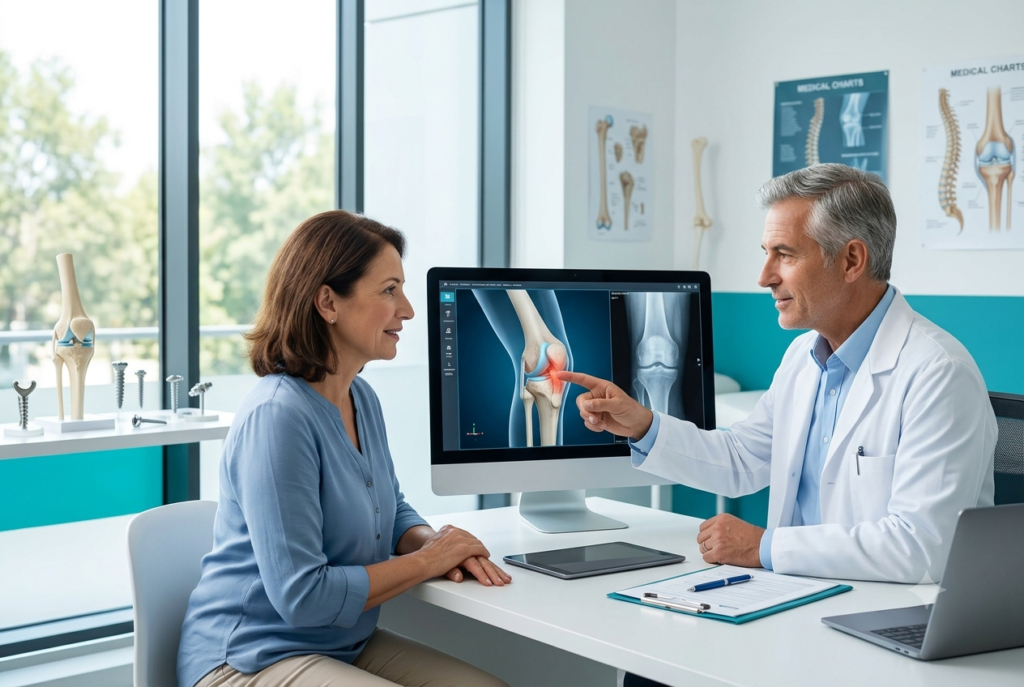

Knee pain can be easy to ignore when it happens only during certain activities. You may feel fine while sitting, but notice discomfort when walking for a longer distance, climbing stairs, standing up from a chair, or exercising. In the beginning, many people simply reduce their activity and wait for the pain to settle.
However, recurring knee pain can have different causes, ranging from overuse and muscle weakness to arthritis, ligament injuries, cartilage problems, or previous trauma. Understanding when the symptoms need professional attention can help you avoid unnecessary delays in diagnosis and treatment.
If knee pain is interfering with your everyday movement, consulting an Orthopedic Doctor in Wakad can help identify the underlying problem and determine the appropriate treatment.
Why Does Your Knee Hurt While Walking or Using Stairs?
Walking and climbing stairs place different levels of load on the knee joint. If the joint, cartilage, muscles, or supporting structures are affected, these activities may make the symptoms more noticeable.
Common reasons for knee pain include:
- Knee arthritis
- Cartilage wear or damage
- Ligament injuries
- Meniscus injuries
- Previous fractures or trauma
- Sports injuries
- Muscle weakness
- Overuse
- Patellar or kneecap-related problems
- Joint inflammation
- Age-related changes
The exact cause cannot be determined from pain alone. A clinical examination by an Orthopedic Doctor in Wakad can help determine whether further investigation is required.
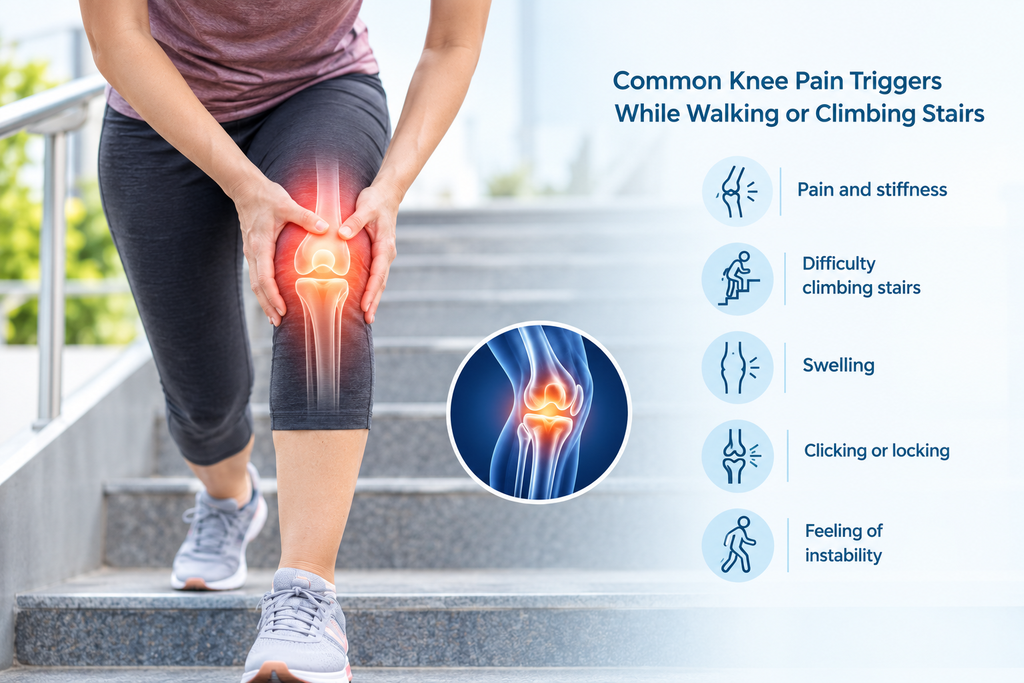
7 Signs Your Knee Pain Deserves an Orthopedic Check
Not every episode of knee discomfort requires specialist care. But certain symptoms indicate that it may be time to stop ignoring the problem.
1. Pain Keeps Coming Back
If knee pain repeatedly returns after walking, exercising, or climbing stairs, it is worth understanding why.
Repeated symptoms may indicate an underlying joint or soft-tissue problem rather than a temporary strain.
2. Stairs Have Become Difficult
If climbing or descending stairs has gradually become uncomfortable, particularly when the problem is affecting your routine, an orthopedic assessment may be useful.
Stair-related pain can occur with several knee conditions, including problems affecting the kneecap or degenerative joint changes.
3. Your Knee Swells
Swelling after activity or repeated episodes of swelling should not simply be ignored.
The cause can vary depending on whether the swelling followed an injury, developed gradually, or occurs alongside stiffness and pain.
4. Your Knee Feels Unstable
A feeling that the knee may buckle or give way can occur after certain injuries or when the supporting structures of the joint are affected.
This is particularly important if instability started after a sports injury or fall.
5. You Hear Clicking or Experience Locking
Some clicking can occur without representing a serious problem. However, painful clicking, catching, or locking accompanied by restricted movement deserves evaluation.
6. You Have Difficulty Straightening or Bending the Knee
Reduced movement can affect everyday activities such as sitting down, getting up, walking, or using stairs.
Persistent restriction should be assessed rather than managed indefinitely at home.
7. Pain Is Affecting Your Lifestyle
If you have stopped going for walks, exercising, playing sports, or using stairs because of knee pain, the problem is already affecting your quality of life.
This is a reasonable point to consult an Orthopedic Doctor in Wakad and understand your treatment options.
Knee Pain While Climbing Stairs: What Could It Mean?
Many people first notice knee problems while climbing stairs.
This is because climbing requires the knee to work against a greater load than ordinary walking. Problems involving the kneecap, cartilage, muscles, or joint can therefore become more noticeable.
You may experience:
- Pain at the front of the knee
- Discomfort while bending the knee
- Pain while getting up from a chair
- Difficulty going downstairs
- Stiffness after sitting
- Pain after prolonged activity
These symptoms can have different causes, so it is important not to assume that every case is arthritis.
A physical examination can help an orthopedic specialist understand the pattern of your symptoms and determine whether imaging or other investigations are necessary.
When Walking Becomes Uncomfortable
Walking is one of the simplest ways to remain active, but persistent knee pain can gradually change how you move.
You may begin taking shorter steps, avoiding uneven surfaces, putting more weight on the other leg, or reducing your walking distance.
Over time, these changes can affect your overall mobility.
If knee pain has started changing your walking pattern, an Orthopedic Doctor in Wakad can assess the joint, surrounding muscles, movement, and stability to determine what may be contributing to the problem.
Is It Arthritis or an Injury?
Knee pain does not always have the same cause.
Arthritis-related pain
Arthritis may develop gradually and can be associated with:
- Pain during movement
- Morning or activity-related stiffness
- Swelling
- Reduced range of motion
- Difficulty walking
- Pain while using stairs
Injury-related pain
An injury may occur suddenly following:
- A fall
- Twisting of the knee
- Sports activity
- Road accident
- Sudden change in direction
- Direct impact
Ligament, cartilage, meniscus, and other injuries can require different treatment approaches.
Because symptoms can overlap, a proper orthopedic assessment is important before deciding what treatment is appropriate.
What Happens During an Orthopedic Knee Evaluation?
Your first appointment does not automatically mean that you will be advised to undergo surgery.
An orthopedic evaluation usually begins with a discussion about your symptoms and medical history.
The doctor may ask:
- When did the pain begin?
- Does it occur while walking or climbing stairs?
- Was there an injury?
- Does the knee swell?
- Does it feel unstable?
- Have you tried physiotherapy or medication?
- Does the pain affect your sleep or daily activities?
- Have you had previous knee surgery?
During an evaluation, an Orthopedic Doctor in Wakad may assess your walking pattern, knee movement, stability, swelling, and areas of tenderness before deciding whether further investigations are needed.
The knee may then be examined for movement, swelling, tenderness, alignment, stability, and muscle strength.
Depending on the findings, the doctor may recommend an X-ray, MRI, or other investigation.
Treatment Depends on What Is Causing the Pain
There is no single treatment for all types of knee pain.
Your treatment plan may include one or more approaches depending on the diagnosis.
Activity Modification
Temporarily reducing activities that aggravate your symptoms may help while the underlying problem is being assessed.
Physiotherapy
Specific exercises can help improve muscle strength, flexibility, balance, and joint function.
Medication
Depending on the condition, a doctor may recommend appropriate medication for pain or inflammation.
Weight Management
For people with excess body weight, appropriate weight management may help reduce mechanical stress on the knee.
Injections
In selected situations, an orthopedic specialist may discuss injection-based treatment depending on the underlying condition.
Surgery
Surgery may be considered when there is significant structural damage or when appropriate non-surgical treatment has not provided sufficient improvement.
The goal is to choose treatment according to the patient’s condition rather than assuming that every knee problem requires an operation.
An Orthopedic Doctor in Wakad can recommend a treatment approach based on the cause, severity of symptoms, activity level, and overall knee function.
When Is Knee Replacement Considered?
Knee replacement is generally not the first treatment for every person with knee pain.
It may be considered when advanced joint damage causes significant and persistent symptoms that interfere with everyday activities and other appropriate treatments have not provided adequate relief.
Patients may experience:
- Persistent knee pain
- Severe stiffness
- Difficulty walking
- Difficulty climbing stairs
- Pain during routine activities
- Significant reduction in mobility
- Advanced joint degeneration
A Knee Replacement Surgeon in Wakad can evaluate the condition and explain whether knee replacement is appropriate.
For selected patients, robotic-assisted techniques may also be discussed. A Best Robotic Knee Replacement Surgeon in Wakad can assess whether this approach is suitable based on the individual’s anatomy, diagnosis, and surgical requirements.
Meet the Orthopedic Doctor in Wakad
Patients searching for an Orthopedic Doctor in Wakad may have very different needs. Someone with persistent knee arthritis may require joint replacement expertise, while another patient may need assessment for a sports injury or ankle problem.
Dr. Siddhesh Parab – Orthopedic Surgeon Wakad
Dr. Siddhesh Parab provides orthopedic care for knee, hip, joint, trauma, and other musculoskeletal conditions.
His area of expertise includes knee replacement, hip surgery, joint surgery, and trauma-related orthopedic care. Patients experiencing persistent knee pain, mobility difficulties, joint degeneration, or orthopedic injuries can consult him for evaluation and treatment planning.
For patients searching for an Orthopedic Surgeon Wakad, Dr. Parab can assess the condition and explain suitable conservative or surgical treatment options.
Patients who require advanced joint care may also discuss options related to Joint Replacement Surgeon in Wakad, including knee and hip replacement procedures. Robotic-assisted procedures may be considered when clinically appropriate.
Dr. Kapil Saoji – Foot, Ankle and Joint Care
Dr. Kapil Saoji focuses on orthopedic conditions involving the foot, ankle, lower limb, and selected joint-related problems.
Patients looking for a Foot & Ankle Specialist in Wakad can consult him for conditions involving ankle injuries, instability, sports-related foot problems, and other mobility concerns.
For patients experiencing persistent symptoms following an ankle injury, an Ankle Injury Specialist near Wakad can assess the injury and determine whether rehabilitation, conservative management, or surgical treatment is appropriate.
His orthopedic expertise also includes joint and knee replacement care, making him relevant for patients exploring knee replacement surgery in Wakad when clinically indicated.
Why You Should Not Keep Adjusting Your Routine Around Knee Pain
One of the biggest problems with long-term knee pain is how gradually it can change your lifestyle.
First, you may avoid one flight of stairs.
Then you may stop taking evening walks.
Later, you may avoid exercise altogether.
Eventually, reduced activity can affect muscle strength and overall mobility.
Instead of continuously changing your routine to accommodate pain, consider getting an evaluation if symptoms are persistent or worsening.
An Orthopedic Doctor in Wakad can help you understand whether your symptoms require treatment and what options are available.
Knee Pain After a Sports Injury Needs Attention
Active individuals may experience knee pain after running, jumping, sudden turns, or contact sports.
A sports-related injury may involve the ligaments, cartilage, meniscus, muscles, or other structures.
Warning signs include:
- Sudden swelling
- A popping sensation
- Difficulty putting weight on the leg
- Knee instability
- Restricted movement
- Persistent pain after the injury
Returning to sports simply because the pain has reduced may not always be appropriate.
A proper assessment can help determine when it is safe to resume activity.
Patients with associated foot and ankle injuries may also require a Sports Foot Injury Treatment Wakad approach when symptoms involve the lower limb.
Knee Problems Can Change the Way You Walk
Your knee does not work in isolation.
When one knee hurts, you may unconsciously place more weight on the opposite leg or change your walking pattern.
This can place additional stress on other parts of the lower limb.
For this reason, an orthopedic evaluation should consider overall movement rather than focusing only on the painful spot.
This is especially relevant for people who have simultaneous knee, hip, ankle, or foot problems.
What Can You Do Before Your Appointment?
If your knee pain is persistent, keep track of your symptoms before visiting an Orthopedic Doctor in Wakad.
Make a note of:
- When the pain occurs
- Whether walking makes it worse
- Whether stairs trigger symptoms
- Whether there is swelling
- Whether the knee locks or clicks
- Whether you feel instability
- What activities make the pain worse
- What treatments you have already tried
Bring previous X-rays, MRI scans, prescriptions, and medical reports if you have them.
This information can make your consultation more productive.
When Knee Pain Requires Urgent Medical Attention
Some situations require prompt medical evaluation rather than waiting for a routine appointment.
Seek timely medical attention if knee pain follows a significant injury and you:
- Cannot put weight on the leg
- Have severe swelling
- Notice an obvious deformity
- Experience sudden severe pain
- Cannot move the knee
- Have significant instability
The appropriate urgency depends on the nature and severity of the symptoms.
How to Choose an Orthopedic Doctor in Wakad
Searching online for the best Orthopedic Surgeon near me can give you many options, but choosing a specialist should involve more than location.
Consider:
Relevant Expertise
Look for experience with the condition you are experiencing.
Clear Diagnosis
The doctor should explain the likely cause and whether additional tests are necessary.
Treatment Options
Ask about both non-surgical and surgical approaches when relevant.
Communication
You should feel comfortable discussing your symptoms and asking questions.
Rehabilitation Support
Recovery does not always end with treatment or surgery. Rehabilitation can be an important part of restoring movement and strength.
For patients with advanced knee problems, expertise in joint replacement may be particularly relevant.
Frequently Asked Questions
When should I see an Orthopedic Doctor in Wakad for knee pain?
You should consider consulting an Orthopedic Doctor in Wakad if knee pain persists, worsens, causes swelling or instability, or starts affecting walking and everyday activities.
Why does my knee hurt while climbing stairs?
Several conditions can cause stair-related knee pain, including arthritis, kneecap-related problems, cartilage issues, muscle weakness, and injuries. An examination is needed to determine the cause.
Does knee pain always mean arthritis?
No. Knee pain can result from injuries, overuse, ligament problems, cartilage damage, muscle weakness, or several other conditions.
When should I consult a Knee Replacement Surgeon in Wakad?
If significant knee joint damage is causing persistent pain and mobility limitations despite appropriate non-surgical treatment, a knee replacement evaluation may be considered.
Is robotic knee replacement suitable for everyone?
No. Robotic-assisted knee replacement is not automatically appropriate for every patient. An orthopedic surgeon can determine whether it is suitable for your condition.
Who can I consult for an ankle injury?
A Foot & Ankle Specialist in Wakad can evaluate persistent ankle pain, instability, sports injuries, and other foot or ankle conditions.
Can physiotherapy help knee pain?
Physiotherapy may help with certain knee conditions by improving strength, flexibility, movement, and function. The exercises should be appropriate for the underlying diagnosis.
Don’t Let Knee Pain Decide How You Move
Pain while walking or climbing stairs may seem manageable at first, but persistent symptoms can gradually change your daily routine.
If your knee pain is recurring, worsening, causing swelling or instability, or limiting your activities, an orthopedic evaluation can help you understand the reason behind it.
An Orthopedic Doctor in Wakad can assess your symptoms, identify potential causes, and guide you toward an appropriate treatment plan.
Whether you need conservative management, physiotherapy, treatment for an injury, or evaluation for joint replacement, the right approach depends on your individual condition.
If knee pain is making everyday movement difficult, consider scheduling an orthopedic consultation at Pentagon Hospital, Wakad, to discuss your symptoms and treatment options.