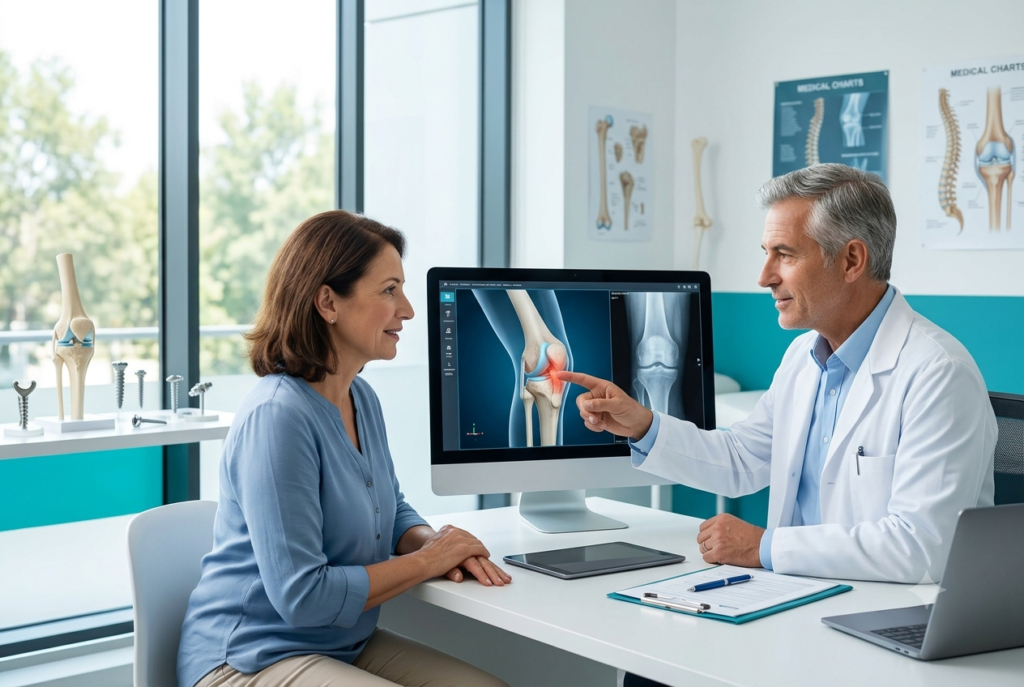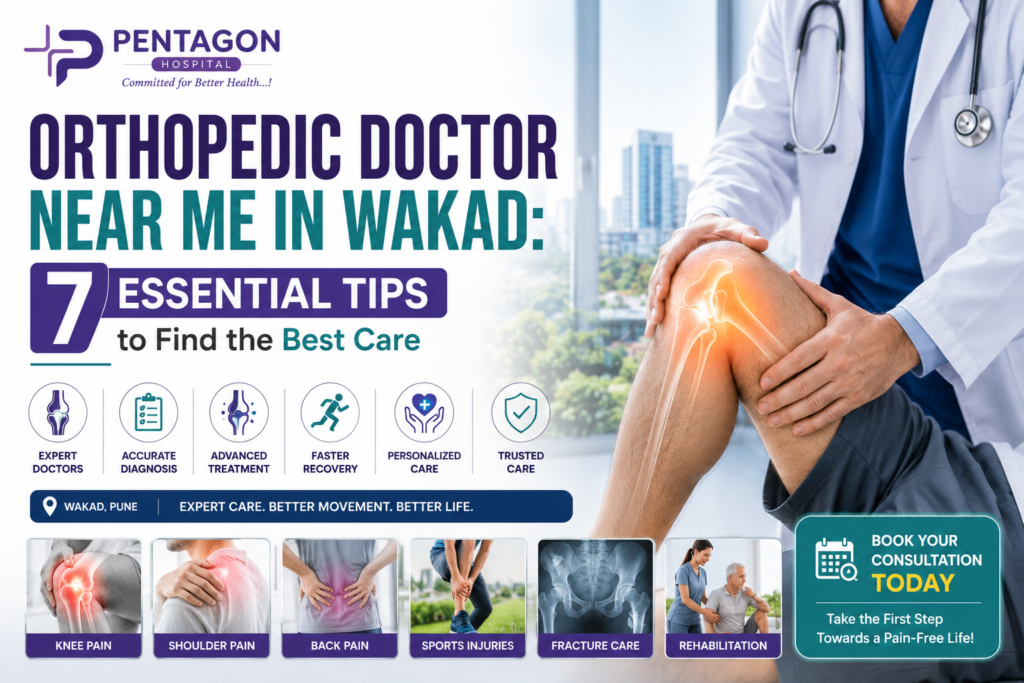

Knee pain after climbing stairs, persistent shoulder discomfort, a sports injury, or stiffness in the hip can slowly interfere with everyday life. When symptoms continue or become difficult to manage, many people start searching for the Best Orthopedic Doctor in Wakad who can identify the underlying problem and recommend the right treatment.
Wakad has developed into a busy residential and commercial area of Pune. With working professionals, families, older adults, and an active population living in and around the locality, orthopedic problems can arise for many different reasons. Some are linked to ageing and arthritis, while others may result from sports, accidents, repetitive strain, poor posture, or previous injuries.
However, choosing an orthopedic doctor should not be based only on online ratings or the number of procedures performed. The right specialist should have relevant qualifications, experience with your particular condition, a clear diagnostic approach, and the ability to explain both non-surgical and surgical treatment options. This guide explains what to look for when choosing an orthopedic doctor in Wakad and when specialist care may be necessary.
What Makes a Good Orthopedic Doctor in Wakad?
The term Best Orthopedic Doctor in Wakad can mean different things to different patients. Someone with a sports injury may need a specialist experienced in arthroscopy and ligament problems, while a person with advanced knee arthritis may need a joint replacement specialist.
Therefore, instead of looking for one doctor who treats every condition in exactly the same way, consider whether the doctor’s expertise matches your specific orthopedic concern.
A good orthopedic consultation should generally include:
- Detailed medical history
- Physical examination
- Assessment of pain and movement
- Appropriate diagnostic investigations
- Explanation of the diagnosis
- Discussion of treatment options
- Consideration of non-surgical care
- Surgery when clinically appropriate
- Rehabilitation and follow-up
The goal is not simply to reduce pain temporarily. It is to understand the cause of the problem and develop a treatment plan that supports long-term mobility and function.
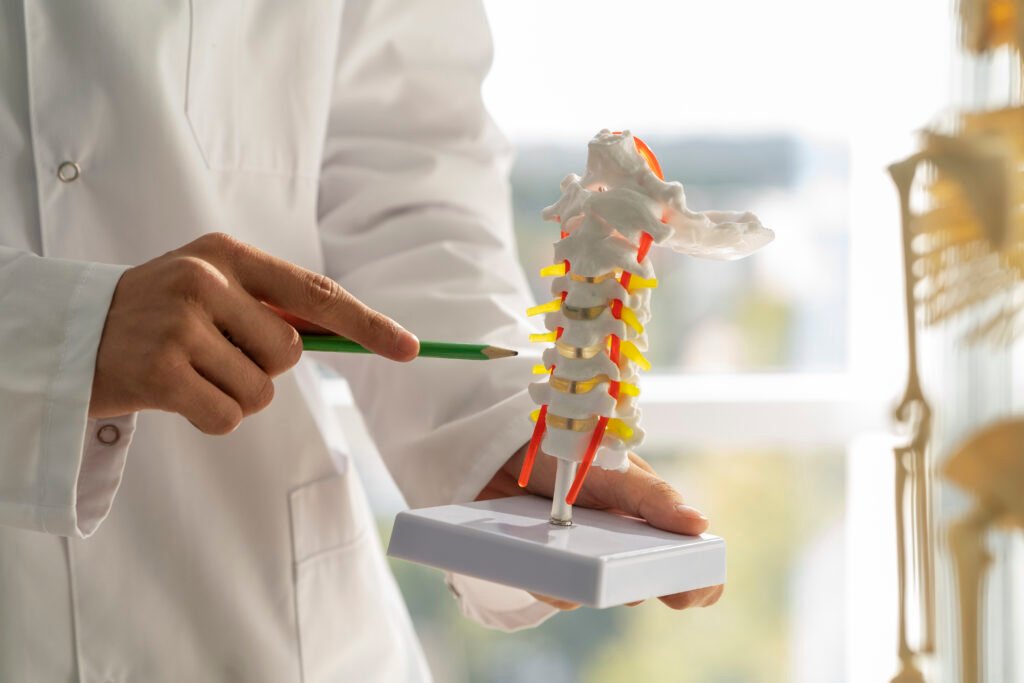
Why You May Need an Orthopedic Doctor in Wakad
Orthopedic doctors diagnose and treat conditions affecting the bones, joints, muscles, ligaments, tendons, and other parts of the musculoskeletal system.
These problems can affect people of all ages.
For example, a young athlete may develop a ligament injury during sports, while an older adult may experience joint degeneration due to osteoarthritis. Similarly, a working professional may develop neck, shoulder, or back discomfort after spending long hours at a desk.
Common reasons to consult an orthopedic doctor include:
- Knee pain
- Hip pain
- Shoulder pain
- Sports injuries
- Ligament injuries
- Fractures
- Arthritis
- Joint stiffness
- Joint instability
- Muscle and tendon injuries
- Chronic back and neck problems
- Difficulty walking
- Reduced range of movement
The right treatment depends on the underlying cause rather than the location of pain alone.
When Should You See the Best Orthopedic Doctor in Wakad?
Not every episode of muscle or joint discomfort requires specialist treatment. Mild pain after unusual physical activity may improve with rest and appropriate self-care.
However, an orthopedic consultation becomes more important when symptoms are persistent, worsening, or interfering with normal activities.
Consider seeing an orthopedic doctor if you experience:
Persistent Pain
Pain that continues for several weeks or repeatedly returns should be evaluated rather than ignored.
Difficulty Walking
Pain or stiffness that changes your walking pattern can affect other joints and muscles over time.
Joint Swelling
Repeated or unexplained swelling may require medical assessment.
Reduced Movement
If you cannot fully bend your knee, move your shoulder, or rotate your hip as before, an orthopedic evaluation can help identify the cause.
Joint Instability
A knee, ankle, or shoulder that repeatedly feels unstable may indicate an underlying ligament or structural problem.
Sports Injury
Sudden pain, swelling, bruising, or restricted movement after sports may require an assessment.
Injury or Fracture
Significant falls, accidents, or direct trauma should receive timely medical attention.
Pain Affecting Sleep or Daily Life
If joint pain makes sleeping, climbing stairs, working, exercising, or performing household activities difficult, it is worth discussing the symptoms with a specialist.
Top Orthopedic Doctors to Consider in and Around Wakad
When looking for the Best Orthopedic Doctor in Wakad, it is useful to consider the doctor’s specific area of expertise. Orthopedic care covers several specialties, including joint replacement, trauma care, knee and hip surgery, foot and ankle conditions, sports injuries, and general musculoskeletal problems.
Below are some orthopedic doctors from Wakad and other parts of Pune who can be considered based on their respective areas of expertise.
1. Dr. Siddhesh Parab – Orthopedic Doctor in Wakad
Dr. Siddhesh Parab is a trauma orthopedic surgeon in Wakad with experience in treating a wide range of orthopedic conditions. His areas of care include joint problems, hip surgery, knee replacement, fractures, complex trauma, sports injuries, and other musculoskeletal conditions.
He also provides care for patients requiring joint replacement procedures involving the knee and hip. His experience in trauma and orthopedic surgery allows him to evaluate both acute injuries and long-term joint problems and recommend treatment according to the patient’s condition.
For patients looking for an Orthopedic Doctor in Wakad for knee problems, hip conditions, joint disorders, fractures, or trauma-related concerns, his broad orthopedic expertise can be particularly relevant.
2. Dr. Kapil Saoji – Foot and Ankle Doctor in Wakad
Dr. Kapil Saoji is a foot and ankle doctor in Wakad, with a specialized focus on conditions affecting the foot and ankle. His expertise includes the evaluation and management of foot and ankle injuries, joint problems, sports-related conditions, and other disorders affecting lower-limb function.
Along with his foot and ankle expertise, Dr. Saoji also performs knee replacement procedures. This combination of focused foot and ankle care with knee replacement expertise makes his practice relevant to patients dealing with different lower-limb orthopedic conditions.
Patients experiencing persistent foot or ankle pain, instability, injuries, or knee problems can seek an appropriate orthopedic evaluation based on their symptoms and treatment needs.
3. Dr. Amit Laturkar – Orthopedic Doctor in Aundh
Dr. Amit Laturkar is widely recognized as one of the leading orthopedic doctors in Aundh, Pune. He has extensive experience in diagnosing and treating knee disorders, arthritis, sports injuries, fractures, and other musculoskeletal conditions, with a special interest in knee and joint replacement surgery.
Patients from Aundh, Baner, Pashan, Bavdhan, and nearby areas consult him for comprehensive orthopedic care. His treatment approach focuses on accurate diagnosis, evidence-based management, personalized rehabilitation, and helping patients achieve long-term pain relief while restoring mobility and function.
4. Dr. Suresh Patil – Orthopedic Surgeon in Deccan & Kothrud
Dr. Suresh Patil is regarded as one of the leading orthopedic surgeons serving the Deccan and Kothrud areas of Pune. He is particularly known for his expertise in minimally invasive hip replacement surgery and advanced joint replacement procedures using muscle-sparing techniques.
Having received advanced training in the United States, Dr. Patil incorporates internationally accepted surgical methods designed to reduce tissue damage, minimize postoperative pain, and support faster recovery. Patients frequently seek his expertise for hip arthritis, joint degeneration, fractures, and complex orthopedic conditions requiring specialized surgical care.
5. Dr. Yogesh Jain – Orthopedic Doctor in Market Yard
Dr. Yogesh Jain is a respected orthopedic doctor in Market Yard, Pune, offering comprehensive care for patients with bone, joint, muscle, and spine disorders. He treats a wide range of conditions, including arthritis, fractures, sports injuries, shoulder pain, knee disorders, back pain, and chronic musculoskeletal problems.
His patient-centered approach emphasizes accurate diagnosis, evidence-based treatment, and individualized care plans. Whether managing orthopedic conditions conservatively or performing surgical procedures when indicated, Dr. Jain focuses on relieving pain, restoring mobility, and improving his patients’ overall quality of life.
How to Choose the Right Orthopedic Doctor in Wakad
Finding the Best Orthopedic Doctor in Wakad should involve more than typing “orthopedic doctor near me” into a search engine.
Here are some important factors to consider.
1. Check Qualifications and Training
Start by reviewing the doctor’s medical qualifications and orthopedic training.
Additional fellowships or focused training in areas such as joint replacement, sports medicine, arthroscopy, trauma, spine care, or foot and ankle surgery may be relevant depending on your condition.
However, qualifications should be considered alongside clinical experience and the type of treatment you need.
2. Look for Relevant Clinical Experience
Experience matters most when it is relevant to your condition.
For example, if you have severe knee arthritis, you may want an orthopedic doctor with experience in knee preservation and joint replacement. If you have a sports injury, experience in arthroscopy and ligament treatment may be more relevant.
Therefore, ask:
Does this doctor’s area of expertise match my orthopedic problem?
3. Understand the Doctor’s Treatment Approach
A good orthopedic consultation should not immediately focus on surgery.
Depending on your diagnosis, treatment may include:
- Activity modification
- Physiotherapy
- Exercise-based rehabilitation
- Medication
- Bracing or support
- Injections where appropriate
- Minimally invasive procedures
- Surgery when necessary
The treatment plan should be based on the patient’s condition, symptoms, functional goals, and overall health.
4. Consider Diagnostic Expertise
Correct diagnosis is the foundation of orthopedic treatment.
The doctor may use a combination of:
- Medical history
- Physical examination
- X-rays
- MRI
- CT scans
- Ultrasound
- Blood tests when indicated
Not every patient needs every investigation.
A good diagnostic approach avoids unnecessary testing while ensuring that important conditions are not overlooked.
5. Ask About Surgical Expertise When Necessary
If surgery is being considered, ask the orthopedic surgeon about their experience with the specific procedure.
This becomes particularly important for procedures such as:
- Total Knee Replacement
- Total Hip Replacement
- Arthroscopic Knee Surgery
- Arthroscopic Shoulder Surgery
- Ligament Reconstruction
- Fracture Fixation
- Spine Surgery
The procedure should be recommended based on medical necessity rather than simply because a particular technology is available.
Which Orthopedic Specialist Is Right for Different Problems?
Different orthopedic conditions may require different areas of expertise.
| Orthopedic Problem | Relevant Orthopedic Expertise |
| Knee arthritis | Knee specialist / joint replacement surgeon |
| Hip arthritis | Hip and joint replacement surgeon |
| Sports injury | Sports injury / arthroscopy specialist |
| Ligament injury | Sports medicine / arthroscopy specialist |
| Fracture | Orthopedic trauma specialist |
| Shoulder problem | Shoulder and arthroscopy specialist |
| Foot and ankle problem | Foot and ankle specialist |
| Advanced joint degeneration | Joint replacement specialist |
| Chronic mobility problem | Orthopedic doctor with rehabilitation-focused care |
This is why the “right” orthopedic doctor depends on the patient’s specific condition.
Common Orthopedic Problems Treated by Specialists in Wakad
Knee Arthritis
Knee osteoarthritis can cause pain, stiffness, swelling, and reduced mobility. Initially, treatment may focus on exercise, physiotherapy, weight management where appropriate, medication, and activity modification.
For advanced disease with significant functional limitations, joint replacement may be considered after evaluation.
Hip Problems
Hip arthritis can cause pain around the hip or groin and may make walking, climbing stairs, or getting up from a chair difficult.
Depending on the severity, treatment can range from conservative care to hip replacement.
Shoulder Problems
Shoulder pain can result from rotator cuff problems, frozen shoulder, arthritis, sports injuries, or other conditions.
The treatment depends on the diagnosis and may include physiotherapy, medication, injections when appropriate, or surgery.
Sports Injuries
Sports can place considerable stress on joints and soft tissues.
Common injuries include:
- Ligament tears
- Meniscus injuries
- Muscle strains
- Tendon injuries
- Shoulder instability
- Ankle injuries
Some injuries respond well to structured rehabilitation, while others may require surgical treatment.
Fractures and Trauma
Fractures can range from simple breaks to complex injuries involving joints and surrounding tissues.
An orthopedic trauma specialist can assess the injury and determine whether immobilization, closed treatment, or surgical fixation is required.
Conservative Treatment: Surgery Is Not Always the First Step
One of the most important things to understand when choosing an orthopedic doctor is that surgery is not automatically required.
Depending on the condition, conservative treatment may include:
Physiotherapy
Structured exercises can help improve strength, flexibility, balance, and joint function.
Activity Modification
Temporarily changing activities that aggravate symptoms may help reduce stress on an injured or painful joint.
Weight Management
For some weight-bearing joint conditions, maintaining a healthy weight can reduce mechanical stress on the joints.
Medication
Depending on the diagnosis and individual medical history, a doctor may recommend appropriate medications for pain or inflammation.
Supportive Devices
Braces, orthotics, walking aids, or other supports may be useful for selected conditions.
The appropriate combination depends on the diagnosis.
When Is Orthopedic Surgery Considered?
Surgery may be discussed when:
- The injury is severe
- A fracture requires fixation
- A ligament is significantly damaged
- Conservative treatment has not provided sufficient improvement
- Joint damage is advanced
- Pain significantly affects daily activities
- Mobility has substantially declined
Even then, surgery should follow a detailed assessment.
Patients should understand the expected benefits, possible risks, alternatives, rehabilitation requirements, and likely recovery process before making a decision.
Joint Replacement: When Is It Considered?
Joint replacement is commonly associated with advanced arthritis of the knee or hip.
However, having arthritis does not automatically mean that a patient needs a joint replacement.
An orthopedic doctor may consider:
- Severity of joint damage
- Level of pain
- Functional limitations
- Response to non-surgical treatment
- Age and overall health
- Activity requirements
- Patient expectations
The final decision should be individualized.
Understanding Total Knee Replacement
Total Knee Replacement (TKR) involves replacing damaged surfaces of the knee joint with artificial components.
It may be considered for patients with advanced knee joint damage and persistent symptoms that substantially affect their quality of life.
A typical treatment pathway may include:
Evaluation → Imaging → Non-surgical treatment where appropriate → Reassessment → Surgical planning when indicated → Knee replacement → Rehabilitation
Recovery varies from person to person.
Physiotherapy and gradual progression of activity are generally important components of rehabilitation.
Understanding Total Hip Replacement
Total Hip Replacement (THR) involves replacing damaged portions of the hip joint with artificial components.
It may be considered when severe hip joint damage causes persistent pain and significant limitations despite appropriate non-surgical treatment.
Patients should discuss:
- Why replacement is being considered
- Available surgical approaches
- Expected recovery
- Potential risks
- Rehabilitation
- Activity restrictions
- Long-term follow-up
with their orthopedic surgeon.
What About Robotic Joint Replacement?
Robotic-assisted joint replacement has become an important area of interest for patients searching for advanced orthopedic care.
Robotic technology can assist with surgical planning and provide computer-assisted guidance during certain joint replacement procedures.
However, it is important to understand that:
The robotic system does not replace the orthopedic surgeon.
The surgeon remains responsible for evaluating the patient, deciding whether surgery is appropriate, planning the procedure, performing the operation, and managing the patient’s recovery.
Robotic assistance may be suitable for some patients but is not automatically necessary for everyone.
Symptoms and Possible Causes
| Symptom | Possible Causes | When to Consider Evaluation |
| Persistent knee pain | Arthritis, meniscus problem, ligament injury | Pain continues or affects daily activities |
| Hip pain | Arthritis, injury, tendon problems | Walking or movement becomes difficult |
| Shoulder pain | Rotator cuff problem, arthritis, frozen shoulder | Pain persists or movement decreases |
| Joint swelling | Injury, arthritis, inflammation | Swelling is recurrent or unexplained |
| Joint instability | Ligament injury or structural problem | Joint repeatedly gives way |
| Sudden severe pain | Injury, fracture, acute condition | Immediate medical assessment may be needed |
| Reduced movement | Arthritis, injury, stiffness | Movement progressively worsens |
| Pain after sports | Sprain, strain, ligament or tendon injury | Pain, swelling, or instability persists |
How Technology Is Changing Orthopedic Treatment
Modern orthopedic care increasingly combines clinical expertise with advanced diagnostic and surgical technologies.
Depending on the condition, doctors may use:
- Digital X-rays
- MRI
- CT imaging
- Computer-assisted surgical planning
- Robotic-assisted joint replacement
- Arthroscopic techniques
- Advanced rehabilitation tools
Technology can improve planning and provide additional information. However, it should always be used as part of a broader clinical decision-making process.
The most advanced equipment is useful only when it is appropriate for the patient’s condition.
How to Prepare for Your First Orthopedic Consultation
A little preparation can make the consultation more productive.
Before your appointment, note:
- When the pain started
- Where exactly you feel pain
- What makes it worse
- What makes it better
- Whether there is swelling
- Whether movement is restricted
- Any previous injuries
- Previous surgeries
- Existing medical conditions
- Current medications
- Previous imaging reports
If you already have X-rays, MRI scans, prescriptions, or medical reports, take them to the appointment.
Questions to Ask Your Orthopedic Doctor
Choosing the Best Orthopedic Doctor in Wakad also means choosing someone who communicates clearly.
Consider asking:
- What is causing my symptoms?
- Do I need any imaging or other tests?
- Can my condition improve without surgery?
- What treatment options are available?
- How long should I try conservative treatment?
- If surgery is needed, why is it recommended?
- What are the potential risks?
- How long could recovery take?
- Will I need physiotherapy?
- When can I return to work, exercise, or normal activities?
A consultation should give you a clear understanding of your condition and available options.
What to Check Before Choosing an Orthopedic Doctor
| Factor | Why It Matters |
| Qualifications | Shows formal medical and orthopedic training |
| Relevant Experience | Helps match expertise to your condition |
| Specialization | Important for complex or procedure-specific problems |
| Diagnostic Approach | Supports accurate identification of the problem |
| Treatment Options | Allows consideration of conservative and surgical care |
| Surgical Expertise | Important when an operation is required |
| Hospital Infrastructure | Supports diagnosis, surgery, and recovery |
| Rehabilitation | Helps restore movement and function |
| Communication | Helps patients understand their choices |
| Follow-Up | Supports long-term recovery |
Why Location Matters When Choosing an Orthopedic Doctor in Wakad
Orthopedic treatment is often not a one-time interaction.
A patient may need:
Consultation → Investigation → Treatment → Follow-Up → Rehabilitation → Recovery
For patients undergoing physiotherapy, fracture treatment, joint replacement, or post-operative care, convenient access to the doctor and hospital can make the overall treatment journey easier.
This is particularly relevant for people living or working in Wakad, Hinjewadi, Punawale, Tathawade, Baner, and nearby areas.
However, convenience should complement—not replace—clinical expertise.
How to Choose an Orthopedic Doctor for Knee Pain
If your primary concern is knee pain, consider whether the doctor has experience with:
- Knee arthritis
- Sports injuries
- Meniscus problems
- Ligament injuries
- Arthroscopic procedures
- Knee preservation
- Total Knee Replacement
- Rehabilitation
A detailed examination can help determine whether your pain is caused by arthritis, injury, inflammation, muscle weakness, or another problem.
How to Choose an Orthopedic Doctor for Hip Pain
For persistent hip pain, look for relevant experience in:
- Hip arthritis
- Hip replacement
- Sports-related hip problems
- Fractures
- Joint degeneration
- Rehabilitation
Hip pain can sometimes be felt in the groin, thigh, buttock, or even around the knee. Therefore, accurate diagnosis is particularly important.
How to Choose an Orthopedic Doctor for Sports Injuries
If you are physically active or participate in sports, consider an orthopedic doctor with experience in:
- Ligament injuries
- Meniscus injuries
- Arthroscopy
- Sports trauma
- Tendon injuries
- Joint instability
- Rehabilitation
Returning to sports too quickly after an injury can sometimes increase the risk of reinjury. A structured recovery plan can help patients progress safely.
A Patient Story: From Persistent Knee Pain to a Clear Treatment Plan
Consider a 58-year-old working professional from Wakad who begins experiencing knee pain while climbing stairs.
Initially, the discomfort is manageable. Over several months, however, the pain becomes more frequent. The patient starts avoiding evening walks and finds it increasingly difficult to get up from a chair.
Instead of assuming that surgery is immediately necessary, the patient consults an orthopedic doctor.
The evaluation includes a medical history, physical examination, and appropriate imaging. The doctor explains the condition and discusses treatment options based on the severity of the joint problem.
The patient begins with an appropriate treatment plan and rehabilitation. If symptoms improve, surgery may not be necessary. If the joint damage is advanced and symptoms continue despite suitable treatment, joint replacement may later be discussed.
This example highlights an important principle: good orthopedic care begins with diagnosis and individualized decision-making, not with choosing a procedure first.
Why the Right Orthopedic Doctor Matters
Orthopedic conditions can affect movement, independence, work, exercise, and quality of life.
Choosing the right doctor can help ensure that:
- Your symptoms are properly evaluated
- The underlying cause is identified
- Appropriate investigations are considered
- Non-surgical options are discussed
- Surgery is recommended only when appropriate
- Recovery and rehabilitation are planned
- Follow-up care is available
The right orthopedic specialist should make you feel informed rather than pressured.
Frequently Asked Questions
1. Who is the Best Orthopedic Doctor in Wakad?
The best orthopedic doctor for a patient depends on the specific condition and treatment required. Factors such as qualifications, relevant experience, specialization, diagnostic approach, treatment options, hospital facilities, and rehabilitation support should be considered. A patient with knee arthritis may require different expertise from someone with a sports injury or fracture.
2. When should I see an orthopedic doctor?
You should consider consulting an orthopedic doctor when pain, swelling, stiffness, instability, reduced movement, or an injury persists or affects normal activities. An evaluation can help determine whether the problem involves a joint, bone, ligament, tendon, muscle, or another musculoskeletal structure.
3. Do all orthopedic problems require surgery?
No. Many orthopedic conditions can initially be managed with conservative approaches such as physiotherapy, exercise, activity modification, medication, or supportive devices. Surgery may be considered when the condition is severe, conservative treatment has not provided adequate improvement, or structural damage requires surgical correction.
4. How do I choose the right orthopedic specialist?
Start by identifying the type of problem you have and then look for a doctor with relevant expertise. Consider qualifications, clinical experience, specialization, treatment philosophy, diagnostic approach, surgical expertise when applicable, hospital facilities, rehabilitation support, communication, and follow-up care.
5. When is knee replacement considered?
Knee replacement may be considered when advanced joint damage causes significant pain and functional limitations, particularly when appropriate non-surgical treatments have not provided sufficient relief. The decision is based on symptoms, examination findings, imaging, overall health, and the patient’s functional needs.
6. What is the difference between an orthopedic doctor and an orthopedic surgeon?
Orthopedic doctors are trained to diagnose and manage musculoskeletal conditions. Orthopedic surgeons also have surgical training and can perform procedures when surgery is required. Many orthopedic surgeons provide both non-surgical and surgical care, depending on the patient’s condition.
7. Can an orthopedic doctor treat sports injuries?
Yes. Orthopedic specialists can evaluate and treat many sports injuries involving joints, ligaments, tendons, muscles, and bones. Depending on the injury, treatment may include rehabilitation, medication, activity modification, bracing, arthroscopy, ligament reconstruction, or other procedures.
8. What should I bring to an orthopedic consultation?
Bring previous medical records, imaging reports, prescriptions, information about previous injuries or surgeries, and a list of current medications. It can also help to note when your symptoms began and what activities make them better or worse.
9. Is robotic joint replacement suitable for everyone?
No. Robotic-assisted joint replacement is not automatically appropriate for every patient. Suitability depends on factors such as the diagnosis, anatomy, medical history, surgical plan, available technology, and surgeon’s assessment.
10. How important is rehabilitation after orthopedic treatment?
Rehabilitation can be an important part of recovery after many orthopedic treatments. Physiotherapy and structured exercises may help improve strength, flexibility, balance, movement, and function. The rehabilitation plan depends on the diagnosis and treatment performed.
When Should You Book an Orthopedic Consultation?
Consider seeking professional evaluation if you have:
- Persistent joint pain
- Difficulty walking
- Repeated swelling
- Loss of movement
- Joint instability
- Pain following an injury
- Recurrent sports injuries
- Persistent stiffness
- Difficulty performing routine activities
- Pain that affects sleep or work
Early evaluation can help you understand the problem and avoid delaying appropriate treatment.
Take the Next Step for Better Orthopedic Care
Choosing the Best Orthopedic Doctor in Wakad should ultimately be about finding the right combination of expertise, diagnosis, treatment options, communication, and follow-up care.
Whether you are dealing with knee arthritis, hip pain, a sports injury, fracture, shoulder problem, or another musculoskeletal condition, an orthopedic consultation can help clarify the cause and available treatment options.
If your symptoms are persistent or affecting your mobility, consider consulting an orthopedic specialist for a personalized evaluation rather than continuing to manage the problem on your own.
Conclusion
Finding the Best Orthopedic Doctor in Wakad is not simply about choosing the most visible name online. It involves understanding your condition and finding a specialist whose qualifications, experience, and area of expertise match your healthcare needs.
A good orthopedic doctor should focus on accurate diagnosis, evidence-based treatment, conservative options where appropriate, surgical intervention when necessary, and rehabilitation that supports long-term mobility.
For knee and hip problems, sports injuries, fractures, shoulder conditions, arthritis, and other orthopedic concerns, the right specialist can help you understand your options and make informed treatment decisions.
Most importantly, do not wait for orthopedic symptoms to become severely limiting before seeking professional advice. Persistent pain, restricted movement, swelling, instability, or difficulty performing everyday activities deserves appropriate medical evaluatio