
Introducing solid foods is an important milestone in your baby’s growth and development. Around six completed months, babies begin to need additional nutrients and energy alongside breast milk. If you are looking for guidance from the Best Pediatrician in Wakad, understanding when to introduce foods, what to offer at each age, and how to develop healthy eating habits can help you make informed decisions for your child.
Complementary feeding does not mean stopping breastfeeding. Instead, it involves gradually introducing nutritious foods while continuing breastfeeding according to your baby’s needs.
For Indian families, everyday foods such as ragi, rice, dal, khichdi, curd, vegetables, fruits and properly prepared eggs, meat or fish can be included in a balanced diet.
This guide explains complementary feeding from 6 to 24 months, including suitable food textures, meal frequency, portion guidance, healthy food choices and foods that should be avoided.
Quick Answer: Complementary foods are generally introduced at around six completed months, alongside continued breastfeeding. Start with small portions and soft textures, then gradually increase food variety, quantity and texture as your baby develops eating skills.
Understanding Complementary Feeding and Its Importance
Complementary feeding is the process of introducing foods and suitable liquids alongside breast milk when a baby’s nutritional needs begin to exceed what breast milk alone can provide.
It supplies additional energy and nutrients while helping babies develop important eating skills, including chewing, swallowing, handling different food textures and learning to feed themselves.
A balanced complementary diet should include:
- Iron: Supports healthy growth and development.
- Protein: Helps build and repair body tissues.
- Healthy fats: Provide energy and support nutrient absorption.
- Vitamins and minerals: Contribute to normal growth and body functions.
- Adequate energy: Helps meet the nutritional demands of growing babies.
Every baby develops differently, and appetite can change from day to day. Parents should focus on offering nutritious foods and responding to their baby’s hunger and fullness cues rather than insisting on a fixed quantity.
Feeding Your Baby Between 6 and 8 Months
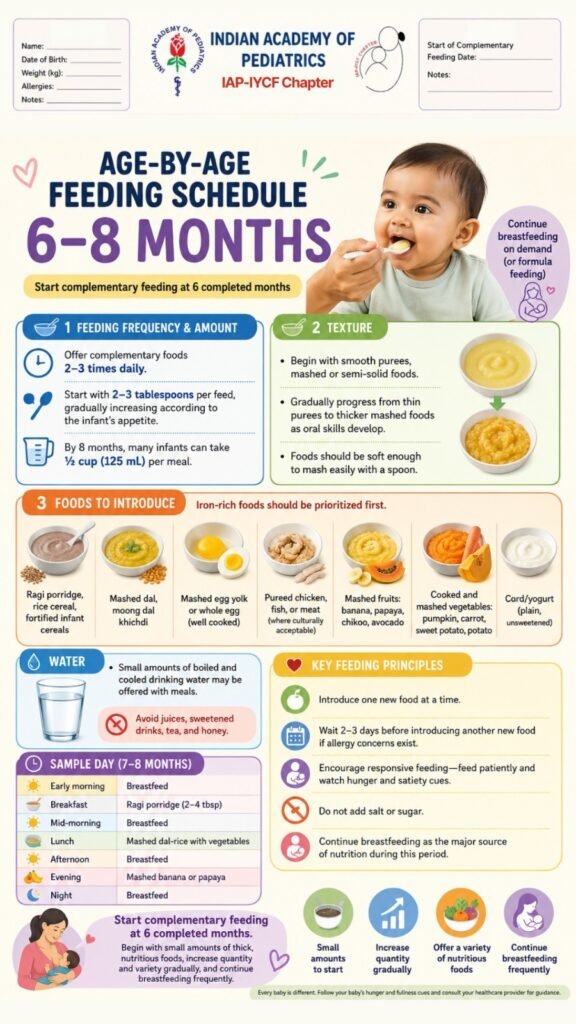
At six completed months, complementary foods can be introduced when your baby shows developmental readiness. Breastfeeding should continue alongside solid foods.
How Much Food Does a Baby Need at Six Months?
Start with approximately two to three tablespoons of food per meal and gradually increase the quantity depending on your baby’s appetite and ability to eat.
Initially, offer complementary foods around two to three times daily. By approximately eight months, many babies may be able to eat around half a cup (125 ml) per meal, although individual requirements vary.
These quantities are general examples, not strict targets. Never force your baby to finish a meal.
Which Food Textures Are Suitable for Young Babies?
During the initial stages, offer foods that are:
- Smooth and soft
- Mashed or semi-solid
- Easy to swallow
- Prepared without hard pieces that could cause choking
As your baby develops better eating skills, gradually make the food thicker and less smooth. Moving from thin purees to thicker mashed foods helps babies become familiar with different textures.
Healthy First Foods to Introduce
There is no single food that every baby must eat first. You can introduce a variety of nutritious options suitable for your baby’s developmental stage.
Examples include:
- Ragi porridge
- Iron-fortified infant cereals
- Rice cereal
- Mashed dal and lentils
- Moong dal khichdi
- Fully cooked eggs
- Pureed or finely prepared chicken, fish or meat
- Mashed banana and papaya
- Chikoo and avocado
- Cooked and mashed pumpkin or carrot
- Sweet potato and potato
- Plain, unsweetened curd or yoghurt
Offer a variety of foods rather than relying on only one or two options.
Why Iron-Rich Foods Matter During Infancy
Iron is particularly important during infancy, making iron-rich foods an important part of complementary feeding.Suitable options include dal, lentils, beans, fully cooked eggs, meat, chicken, fish and iron-fortified infant cereals.Including these foods regularly helps provide iron along with other nutrients required for growth and development.
Can Babies Drink Water at Six Months?
Once complementary feeding begins, small amounts of safe drinking water can be offered with meals. Breast milk remains an important source of nutrition and fluids.
Foods to Avoid Between 6 and 8 Months
Avoid giving young babies:
- Honey
- Added sugar and salt
- Fruit juice and sugary drinks
- Tea and coffee
- Hard foods or pieces that may cause choking
Honey should not be given before 12 months because of the risk of infant botulism.
An Example Feeding Routine for a 7–8-Month-Old Baby
A simple daily routine can help parents understand how complementary foods may fit around breastfeeding.
| Time of day | Example |
| Early morning | Breastfeeding |
| Breakfast | Ragi porridge |
| Mid-morning | Breastfeeding |
| Lunch | Mashed dal and rice with soft vegetables |
| Afternoon | Breastfeeding |
| Evening | Mashed banana or papaya |
| Night | Breastfeeding |
This is only an example. Your baby’s feeding routine may differ according to appetite, sleep patterns and breastfeeding frequency.
Introducing More Variety Between 9 and 11 Months
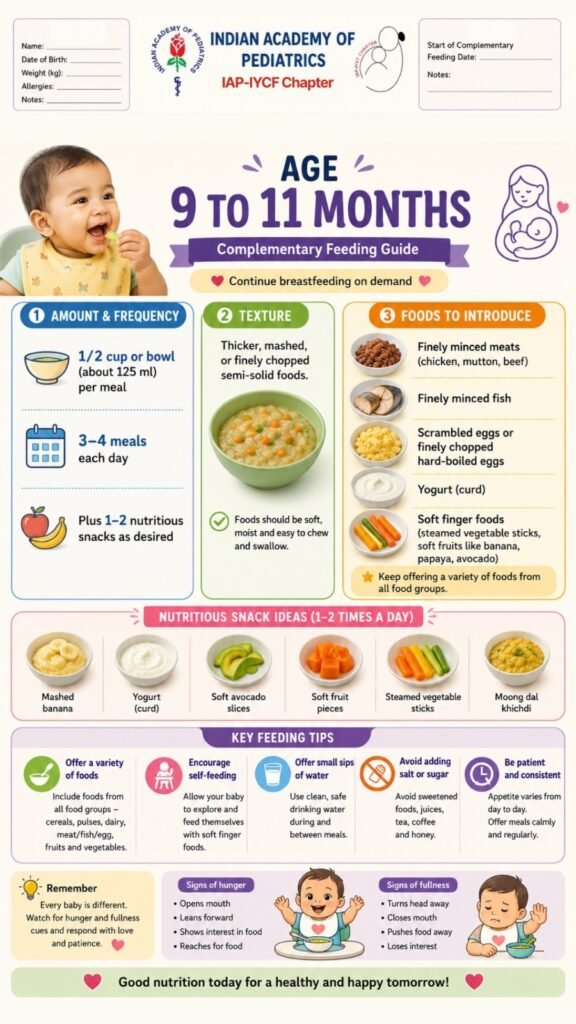
Between nine and eleven months, babies gradually develop the ability to manage thicker foods, soft finger foods and a wider variety of family foods. Continue breastfeeding according to your baby’s needs.
How Much Should a 9-Month-Old Baby Eat?
Around half a cup (125 ml) per meal can serve as a general example, adjusted according to appetite and individual needs.
A routine may include:
- Three to four meals daily
- One or two nutritious snacks, depending on appetite
- Continued breastfeeding
Some meals may be smaller than others. Appetite can vary, so avoid pressuring your baby to eat a fixed amount.
Moving to Thicker Foods and Soft Textures
At this age, food can gradually include:
- Thick mashed preparations
- Finely chopped foods
- Soft, moist foods
- Foods that are easy to chew and swallow
- Soft finger foods when developmentally appropriate
Progressing through different textures helps babies practise eating skills and become familiar with a wider range of foods.
Finger Foods for Babies Aged 9–11 Months
Suitable options may include soft steamed vegetable sticks, soft banana pieces, papaya, avocado, cooked vegetables and properly prepared eggs.
Other family foods may also be offered if they are soft, appropriately sized and suitable for your baby’s developmental stage.
Always supervise your baby while eating, and ensure they are seated upright.
Protein Sources for Growing Babies
Offer a variety of protein-rich foods, including:
- Dal and lentils
- Beans
- Fully cooked eggs
- Chicken and fish
- Other appropriately prepared meats
- Plain curd or yoghurt
Meat and fish should be thoroughly cooked and prepared into a soft texture, with bones removed where applicable. Eggs should also be fully cooked.
Nutritious Snack Ideas
Instead of packaged snacks or sugary foods, consider options such as:
- Mashed banana
- Plain curd or yoghurt
- Soft avocado
- Soft seasonal fruit
- Steamed vegetables
- Soft moong dal khichdi
Prepare each food according to your baby’s chewing abilities and choking risk.
A Balanced Diet for Children Aged 12–24 Months
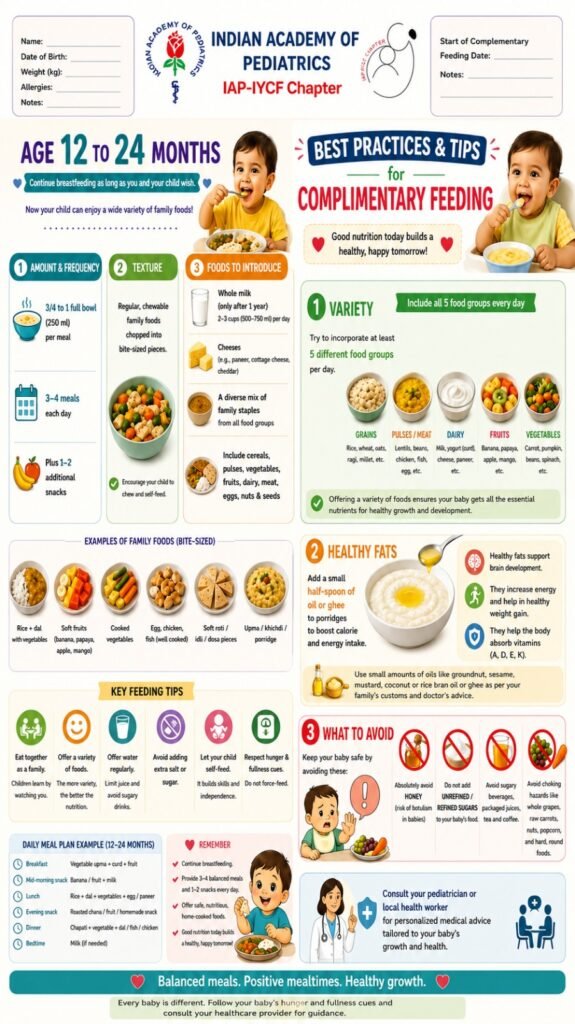
After 12 months, children can gradually eat a wider range of healthy family foods, provided they are prepared with appropriate textures and safe portion sizes. Breastfeeding can continue for as long as the mother and child wish.
How Much Should a One-Year-Old Eat?
Approximately three-quarters to one cup per meal may serve as a general reference, depending on the child’s appetite and nutritional needs.
A daily routine may include:
- Three to four meals
- One or two nutritious snacks
- Suitable milk and dairy foods
- Continued breastfeeding if desired
Toddlers often have unpredictable appetites. They may eat well on some days and show less interest in food on others.
Can a One-Year-Old Drink Cow’s Milk?
After 12 months, whole cow’s milk can generally be included as part of a balanced diet, provided there are no individual medical reasons to avoid it. Milk should complement meals rather than replace a varied diet. If you have concerns about your child’s milk intake, growth or nutrition, consult your pediatrician.
Food Groups to Include in a Toddler’s Diet
A balanced diet should offer foods from different groups.
Grains and cereals
- Rice
- Wheat
- Oats
- Ragi and other millets
- Upma
- Chapati
Pulses and protein foods
- Dal and lentils
- Beans
- Fully cooked eggs
- Chicken and fish
- Other appropriately prepared meats
Dairy foods
- Milk
- Plain curd and yoghurt
- Paneer
- Suitable cheese
Fruits
- Banana
- Papaya
- Mango
- Soft, appropriately prepared apple
- Avocado
- Seasonal fruits
Vegetables
- Carrot
- Pumpkin
- Beans
- Sweet potato
- Spinach
- Potato
- Other seasonal vegetables
Offer different foods across the week to help your child experience a variety of tastes and nutrients.
Including Healthy Fats in Baby and Toddler Meals
Healthy fats provide energy and help the body absorb fat-soluble vitamins. Small amounts of suitable cooking oils or ghee can be added to foods such as khichdi, porridge and cooked vegetables.
Depending on family preferences and the child’s dietary needs, options may include:
- Groundnut oil
- Sesame oil
- Mustard oil
- Coconut oil
- Rice bran oil
- Other suitable cooking oils
- Ghee
Use moderate amounts as part of an overall balanced diet. A varied diet is more important than relying on a single source of fat.
Foods Babies and Young Children Should Avoid
Knowing which foods to avoid is an important part of safe complementary feeding.
1) Honey Before 12 Months
Do not give honey to babies under 12 months because it can cause infant botulism, a serious illness.
2) Added Sugar and Sweeteners
Babies do not need added sugar. Avoid routinely adding sugar, jaggery or other sweeteners to their foods and drinks.
3) Fruit Juice and Sugary Drinks
Avoid sugary beverages, sweetened drinks and packaged juices for babies. Whole fruit, prepared safely for the child’s age, is generally a better choice.
4) Tea and Coffee
Tea and coffee are not suitable drinks for babies and young toddlers. Tea can also interfere with iron absorption when consumed around meals.
Foods That Can Cause Choking
Young children can choke on hard, round, sticky or difficult-to-chew foods.
Examples include:
- Whole grapes
- Whole nuts
- Popcorn
- Raw, hard carrot pieces
- Hard, round foods
- Large pieces of meat
- Other foods that are difficult to chew safely
Prepare foods according to your child’s developmental stage. Cut or modify foods appropriately, ensure children sit upright while eating, and supervise them throughout meals.
Responsive Feeding: Recognising Hunger and Fullness
Responsive feeding means paying attention to your baby’s cues and responding appropriately.
Parents choose which nutritious foods to offer, when meals are served and where the child eats. The child should generally be allowed to decide whether to eat and how much to consume, within a supportive feeding routine.
Signs Your Baby May Be Hungry
Hunger cues can include:
- Reaching towards food
- Opening the mouth when food is offered
- Leaning towards food
- Showing interest in eating
Signs Your Baby May Be Full
Fullness cues can include:
- Turning the head away
- Closing the mouth
- Pushing food away
- Losing interest in eating
Avoid force-feeding or pressuring your child to finish a particular quantity. A calm, supportive environment can help children gradually develop healthier eating habits.
Introducing New Foods and Watching for Allergies
Introduce new foods gradually and observe how your baby responds. Offer age-appropriate foods in safe textures and avoid introducing foods in forms that create a choking risk.
If your child has a history of food allergies or a medical condition that may affect food introduction, speak with your pediatrician about an appropriate approach.
Possible signs of an allergic reaction include:
- Hives or a skin rash
- Swelling
- Vomiting
- Coughing
- Breathing difficulty
Breathing difficulty, significant swelling or other signs of a severe allergic reaction require urgent medical attention.
If you are unsure about introducing allergenic foods, a pediatrician can guide you based on your child’s history and needs.
Sample Indian Meal Plan for Children Aged 12–24 Months
Here is an example of how nutritious Indian foods can be included throughout the day.
Breakfast: Vegetable upma, plain curd and fruit.
Mid-morning snack: Banana or another seasonal fruit, with milk if suitable.
Lunch: Rice, dal, cooked vegetables and egg or paneer.
Evening snack: Fruit, appropriately prepared roasted chana or a nutritious homemade snack.
Dinner: Chapati, cooked vegetables and dal, fish or chicken.
Bedtime: Milk if appropriate and desired.
This is a sample meal plan rather than a fixed prescription. Adjust food textures and portions according to your child’s age, appetite, developmental stage and individual nutritional requirements.
Ten Practical Tips for Complementary Feeding
- Begin complementary feeding at around six completed months when your baby is developmentally ready.
- Continue breastfeeding alongside complementary foods.
- Offer iron-rich foods regularly.
- Increase food quantities gradually according to appetite.
- Progress from smooth foods to mashed, chopped and soft family foods.
- Include different food groups in your child’s diet.
- Encourage age-appropriate self-feeding.
- Observe your baby’s hunger and fullness cues.
- Avoid force-feeding and pressure during meals.
- Avoid honey before 12 months, added sugar, sugary drinks, tea and coffee.
Consistency, patience and a variety of nutritious foods can help make complementary feeding a more positive experience for the whole family.
Supporting Healthy Growth Through Complementary Feeding
Complementary feeding is a gradual process. The goal is not simply to make your baby eat more food, but to provide essential nutrients while helping them develop healthy eating skills.
From six to eight months, focus on soft, nutritious foods, including iron-rich options, while gradually introducing thicker textures.
From nine to eleven months, expand food variety and offer suitable soft finger foods as your baby develops the ability to manage them.
From 12 to 24 months, gradually introduce a balanced family diet with appropriate portions, textures and safe food preparation.
Most importantly, remain patient, offer a variety of nutritious foods, observe your child’s hunger and fullness cues, and avoid force-feeding.
Every child is different. Growth patterns, appetite, developmental readiness, allergies and medical conditions can affect nutritional requirements. If you have concerns about your child’s growth, eating habits, anaemia, allergies, constipation, food intolerance or nutritional intake, seek personalised advice from a qualified pediatrician.
At Pentagon Hospital, parents can seek pediatric guidance to better understand their child’s nutritional needs, growth and development. If you are searching for the Best Child Specialist in Wakad, a pediatric consultation can help address feeding concerns and provide guidance suited to your child’s individual needs.
Book a Pediatric Consultation at Pentagon Hospital
Speak with a pediatrician about your child’s feeding routine, nutrition, growth and developmental needs. Timely guidance can help you make informed decisions at every stage of early childhood.
Frequently Asked Questions
1. When should I start complementary feeding?
Complementary foods are generally introduced at around six completed months, when the baby is developmentally ready. Breastfeeding should continue alongside complementary feeding.
2. What foods can I give my six-month-old baby?
Suitable options may include mashed dal, ragi porridge, iron-fortified infant cereals, mashed banana, cooked vegetables and fully cooked eggs prepared in an appropriate texture.
3. How many meals should a six-month-old baby eat?
Complementary foods may initially be offered around two to three times a day. The quantity and frequency should gradually increase according to the baby’s development, appetite and nutritional needs.
4. Can I give water to my baby after six months?
Yes. Once complementary feeding begins, small amounts of safe drinking water can be offered with meals. Breast milk remains an important source of nutrition and fluids.
5. Which foods should babies avoid before one year?
Avoid honey before 12 months, and do not routinely offer added sugar, sugary drinks, tea or coffee. Foods that create a choking risk should also be avoided or safely modified.
6. How can I tell whether my baby is hungry or full?
Reaching for food and opening the mouth may indicate hunger. Turning away, closing the mouth or pushing food away may indicate fullness. Respond to these cues rather than force-feeding.
7. What should a one-year-old eat every day?
A varied diet may include grains, pulses, vegetables, fruits, protein-rich foods and suitable dairy products. Portions should be adjusted to the child’s appetite and nutritional requirements.
8. When should I consult a pediatrician about feeding problems?
Consult a pediatrician if you are concerned about poor growth, persistent feeding difficulties, suspected allergies, food intolerance or whether your child is receiving adequate nutrition. Seek urgent medical attention for signs of a severe allergic reaction.
9. How can a pediatrician help with complementary feeding?
A pediatrician can assess your child’s growth and development, discuss feeding concerns, and provide age-appropriate guidance based on the child’s nutritional needs and medical history.
10. Where can I seek pediatric guidance in Wakad?
Parents can contact Pentagon Hospital to enquire about pediatric consultation and guidance for concerns related to feeding, nutrition, growth and child development.