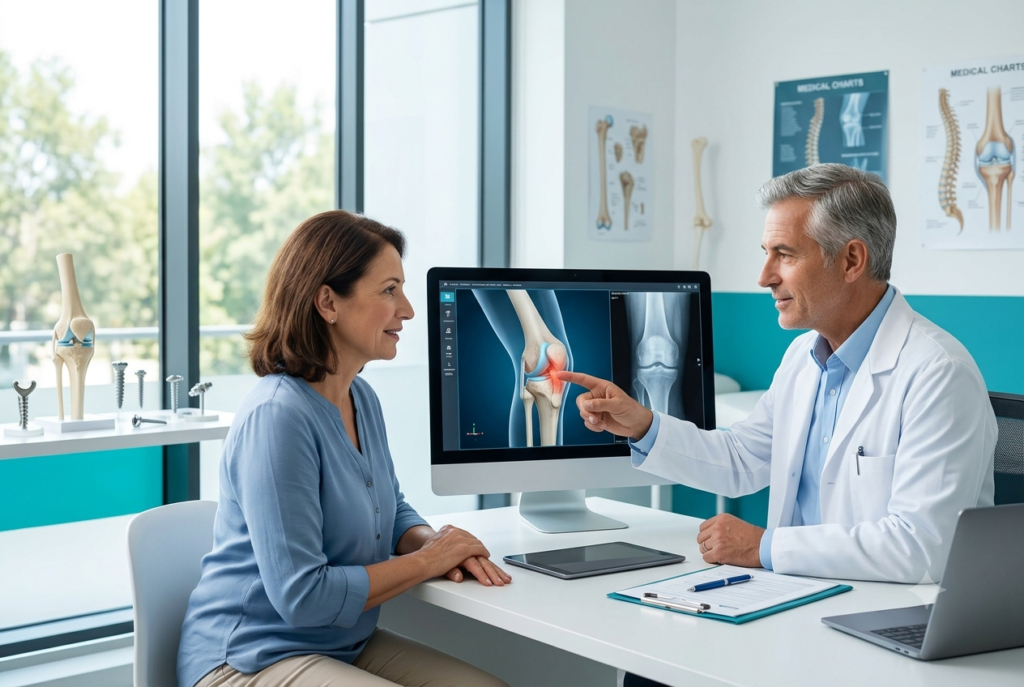

Persistent knee pain can slowly change the way you live. What begins as discomfort while climbing stairs may eventually make walking, standing, exercising, or even getting up from a chair difficult. For some people, medications and physiotherapy provide relief. However, when knee damage becomes advanced, consulting a Knee Replacement Surgeon in Wakad may help patients understand whether surgery is an appropriate next step.
Knee replacement is not recommended simply because a person has knee pain or has reached a certain age. The decision is usually based on several factors, including the severity of joint damage, the intensity of symptoms, reduced mobility, and the response to non-surgical treatment.
If you are searching for a Best Knee Replacement Surgeon in Wakad, this guide explains when knee replacement may be considered, what happens before surgery is recommended, the types of knee replacement available, and how to choose the right orthopedic specialist for your condition.
The Point Where Knee Pain Becomes More Than an Everyday Problem
Many people try to manage knee pain on their own for months or even years. They reduce walking, avoid stairs, stop exercising, or depend on pain medication to continue their routine.
However, these changes can gradually affect overall mobility and quality of life.
You may need an orthopedic evaluation when knee pain begins to interfere with:
- Walking short distances
- Climbing or descending stairs
- Getting up from a chair
- Standing for extended periods
- Sleeping comfortably
- Performing household activities
- Exercising or participating in sports
- Working or commuting
- Maintaining independence
A consultation with an Orthopedic Doctor in Wakad can help determine whether the problem is caused by arthritis, an old injury, ligament damage, cartilage degeneration, or another orthopedic condition.
The goal is not to recommend surgery immediately. The first step is understanding what is actually happening inside the knee joint.
Why Does the Knee Start Failing?
The knee is one of the body’s major weight-bearing joints. It depends on healthy cartilage, bone alignment, ligaments, muscles, and other structures to move smoothly.
Over time, these structures can be affected by degeneration, injury, or disease.
Some common causes of severe knee problems include:
Osteoarthritis
Osteoarthritis is one of the leading causes of progressive knee damage. The protective cartilage within the joint gradually wears down, which can lead to pain, stiffness, swelling, and reduced movement.
Previous Knee Injuries
Old fractures, ligament injuries, or meniscus damage may contribute to joint degeneration later in life.
Rheumatoid and Other Inflammatory Conditions
Inflammatory joint conditions can also damage the knee and affect mobility.
Long-Term Wear and Tear
Repeated stress on the knee over many years may contribute to progressive joint degeneration.
Alignment Problems
In some cases, abnormal alignment can place uneven pressure on certain areas of the knee.
A Knee Replacement Surgeon in Wakad can assess the cause and severity of the problem before discussing the available treatment options.
7 Signs That It May Be Time to Discuss Knee Replacement
The presence of knee pain alone does not automatically mean surgery is required. However, certain signs may indicate that the joint problem has become more advanced.
1. Pain Continues Despite Appropriate Treatment
If physiotherapy, medication, activity modification, and other suitable treatments have not provided adequate relief, further evaluation may be necessary.
Persistent pain should be assessed based on its cause rather than simply managed repeatedly.
2. Walking Distance Is Becoming Shorter
Some patients gradually notice that they can no longer walk as far as they once could.
You may start avoiding shopping trips, walks, travel, or other activities because of knee pain.
A Knee Replacement Surgeon in Wakad can evaluate whether joint damage is contributing to this decline in mobility.
3. Everyday Activities Have Become Difficult
Simple movements may become challenging, including:
- Climbing stairs
- Getting in and out of a car
- Standing while cooking
- Sitting down and getting up
- Walking on uneven surfaces
When the knee begins limiting routine activities, it may be time for a detailed orthopedic assessment.
4. The Knee Is Increasingly Stiff
Stiffness can become particularly noticeable after prolonged sitting or during the morning.
As joint damage progresses, the available range of movement may reduce.
5. Pain Is Affecting Sleep
Nighttime pain can significantly affect rest and overall well-being.
If knee discomfort regularly interrupts sleep, it should be discussed with an Orthopedic Surgeon Wakad.
6. The Knee Has Changed the Way You Walk
A limp or altered walking pattern can place additional stress on other parts of the body.
Patients may unconsciously shift weight to the opposite leg or change their posture to avoid pain.
7. Imaging Shows Advanced Joint Damage
X-rays and other investigations can help evaluate changes within the joint.
However, the decision for surgery is not based on an X-ray alone. A Knee Replacement Surgeon in Wakad will usually consider imaging alongside symptoms, mobility, lifestyle requirements, and previous treatment.
Meet the Orthopedic Specialists for Knee and Joint Care
Patients looking for a Knee Replacement Surgeon in Wakad may benefit from consulting an orthopedic specialist whose expertise matches their specific condition and treatment needs.
Dr. Siddhesh Parab – Orthopedic Surgeon in Wakad
Dr. Siddhesh Parab provides comprehensive orthopedic care for patients dealing with joint problems, knee conditions, hip disorders, fractures, trauma, and other musculoskeletal concerns. His expertise includes joint surgery, hip surgery, knee replacement, and trauma management.
For patients searching for an Orthopedic Surgeon in Wakad, Dr. Parab can be consulted for persistent knee pain, progressive joint degeneration, fractures, and complex orthopedic conditions. Patients with advanced knee or hip problems can also discuss whether joint replacement may be an appropriate treatment option.
His expertise is particularly relevant for individuals looking for a Knee Replacement Surgeon in Wakad or a Joint Replacement Surgeon in Wakad. Depending on the patient’s diagnosis and surgical requirements, advanced options such as robotic-assisted joint replacement may also be discussed.
The treatment approach is based on the individual’s condition, symptoms, joint damage, mobility, and overall treatment goals.
Dr. Kapil Saoji – Foot, Ankle and Joint Care
Dr. Kapil Saoji specializes in orthopedic care related to the foot, ankle, lower limb, and selected joint conditions. His expertise can be particularly helpful for patients experiencing persistent ankle pain, instability, sports-related injuries, or mobility problems.
As a Foot & Ankle Specialist in Wakad, he evaluates conditions affecting the foot and ankle and recommends treatment based on the severity of the problem and the patient’s functional requirements. His care may include conservative management, rehabilitation, or surgical treatment when clinically appropriate.
Dr. Saoji’s expertise also extends to knee and joint-related treatment, making him a relevant choice for patients exploring knee replacement surgery in Wakad or seeking specialized orthopedic guidance.
Before Surgery Enters the Conversation
One of the most important things for patients to understand is that knee replacement is generally not the first treatment option.
Depending on the diagnosis, non-surgical management may include:
- Physiotherapy
- Muscle-strengthening exercises
- Weight management where appropriate
- Activity modification
- Medication prescribed by a doctor
- Supportive devices
- Bracing
- Injections where clinically indicated
- Rehabilitation programs
These approaches may help many patients manage symptoms and improve function.
However, if the knee remains severely painful and daily activities continue to be significantly affected despite appropriate treatment, surgery may become a reasonable option to discuss.
This is where consultation with a Joint Replacement Surgeon in Wakad becomes particularly important.
What Actually Happens During Knee Replacement Surgery?
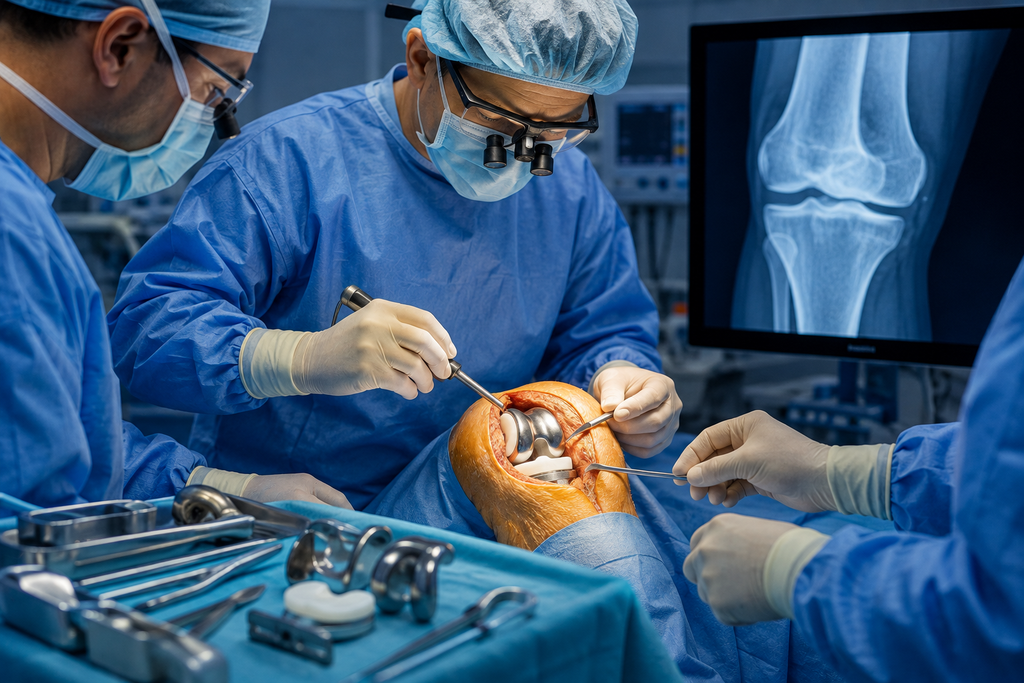
Knee replacement surgery involves replacing damaged portions of the knee joint with artificial components designed to restore smoother joint movement.
Depending on the extent of damage, the procedure may involve replacing part or all of the joint.
The surgical plan is individualized based on factors such as:
- Location of joint damage
- Severity of arthritis
- Knee alignment
- Stability of the joint
- Patient age and health
- Functional requirements
- Previous injuries or surgeries
The objective is generally to reduce pain and improve mobility when the natural joint is severely damaged.
Partial or Total Knee Replacement: What Is the Difference?
Not every patient requires the same type of surgery.
Partial Knee Replacement
A partial knee replacement may be considered when damage is limited to a specific part of the knee.
The surgeon evaluates whether the remaining areas of the joint are healthy enough for this approach.
Total Knee Replacement
A total knee replacement may be recommended when arthritis or joint damage affects multiple areas of the knee.
A Knee Replacement Surgeon in Wakad can explain which procedure is more suitable based on the patient’s individual joint condition.
The decision should always be personalized rather than based on a general assumption that one procedure is better for everyone.
Is There a “Right Age” for Knee Replacement?
There is no single age at which everyone should undergo knee replacement.
The decision depends more on:
- Severity of pain
- Level of joint damage
- Mobility limitations
- Overall health
- Previous treatments
- Daily activity requirements
- The patient’s expectations and goals
Some younger patients may have severe joint damage due to injury or arthritis, while some older adults may continue functioning well without requiring surgery.
Instead of focusing only on age, an Orthopedic Doctor in Wakad evaluates the overall impact of the knee condition.
Understanding Robotic Knee Replacement
Robotic-assisted technology is increasingly discussed by patients considering knee replacement.
A Robotic Knee Replacement Surgeon in Wakad may use robotic technology as part of the surgical process for appropriately selected patients.
Robotic systems can assist with surgical planning and execution. However, the technology does not replace the expertise or decision-making of the surgeon.
The surgeon remains responsible for:
- Diagnosing the condition
- Determining whether surgery is necessary
- Selecting an appropriate treatment approach
- Planning the procedure
- Making clinical decisions during surgery
- Managing postoperative care
Patients searching for the Best Robotic Knee Replacement Surgeon in Wakad should therefore look beyond technology alone.
Experience relevant to the condition, surgical expertise, patient evaluation, rehabilitation planning, and overall clinical care are also important considerations.
When a Knee Problem Is Not Just a Knee Problem
Sometimes pain around the knee may be influenced by other areas of the lower limb.
For example, problems involving the foot, ankle, hip, alignment, or walking pattern may affect how forces are distributed through the knee.
This is one reason a complete orthopedic assessment can be valuable.
Patients with persistent foot or ankle issues may also need evaluation from a Foot & Ankle Specialist in Wakad.
Conditions such as chronic ankle instability, old ankle injuries, and altered walking patterns can affect mobility.
An Ankle Injury Specialist near Wakad may be particularly relevant for people who have recurring ankle injuries or instability.
Similarly, patients with sports-related lower-limb injuries may require specialized Sports Foot Injury Treatment Wakad as part of a broader orthopedic care plan.
How a Knee Replacement Surgeon Decides Whether You Are a Suitable Candidate
A Knee Replacement Surgeon in Wakad does not make the decision based on one symptom or one investigation.
The assessment generally involves several factors.
Your Level of Pain
How often does the pain occur?
Does it affect sleep?
Does it limit daily activities?
Your Ability to Move
The surgeon may evaluate:
- Walking pattern
- Range of motion
- Knee stability
- Ability to bend and straighten the knee
- Functional limitations
Your Imaging Results
X-rays can provide important information about joint space, bone changes, alignment, and the extent of arthritis.
Other investigations may be recommended when necessary.
Your Previous Treatment
The surgeon may consider whether appropriate non-surgical treatment has already been attempted.
Your Overall Health
Medical conditions and general health are important considerations when planning surgery and recovery.
Knee Replacement Surgery Is a Decision, Not a Deadline
Many patients worry that once knee replacement is suggested, they must undergo surgery immediately.
That is not always the case.
The timing of surgery depends on how significantly the condition affects the individual.
For one patient, knee pain may be manageable with rehabilitation and lifestyle adjustments. For another, severe pain may prevent walking or maintaining independence.
The right time for surgery is therefore highly individual.
A consultation with a Knee Replacement Surgeon in Wakad can help patients understand:
- What is causing the pain
- How advanced the joint damage is
- Whether non-surgical treatment is still appropriate
- Whether surgery may provide meaningful improvement
- What recovery could involve
An informed decision is generally better than delaying evaluation indefinitely or rushing into surgery without understanding the available options.
What Should You Expect During Recovery?
Recovery after knee replacement is an active process.
Surgery is only one stage of the overall treatment journey. Rehabilitation plays a major role in helping patients regain movement and strength.
Recovery plans may involve:
- Early guided movement
- Physiotherapy
- Range-of-motion exercises
- Muscle strengthening
- Walking rehabilitation
- Pain management
- Follow-up consultations
Recovery timelines vary between individuals.
Factors such as age, overall health, muscle strength, pre-surgery mobility, type of procedure, and participation in rehabilitation can influence progress.
Your Knee Replacement Surgeon in Wakad and rehabilitation team can provide guidance based on your individual situation.
How to Prepare for a Consultation About Knee Replacement
Before meeting an orthopedic specialist, it can be helpful to keep track of your symptoms.
Consider noting:
- When the pain started
- Which activities increase pain
- Whether swelling occurs
- How far you can comfortably walk
- Whether sleep is affected
- Previous injuries
- Previous treatments
- Current medications
- How the problem affects work and daily activities
You can also prepare questions such as:
What is causing my knee pain?
Understanding the diagnosis should come before choosing a treatment.
Is my joint damage advanced?
Ask the doctor to explain the findings in understandable terms.
Have I tried all appropriate non-surgical options?
This helps you understand where you are in the treatment journey.
Would partial or total knee replacement be more suitable?
The answer depends on the extent and location of joint damage.
Is robotic knee replacement appropriate for me?
A Robotic Knee Replacement Surgeon in Wakad can explain whether robotic assistance is suitable for your particular case.
What will rehabilitation involve?
Recovery planning is an important part of preparing for surgery.
Choosing an Orthopedic Specialist: What Matters Most?
A search for the best Orthopedic Surgeon near me may produce many options, but choosing the right specialist should involve more than convenience.
Consider:
Relevant Expertise
Look for experience relevant to your condition, whether that involves knee replacement, joint surgery, trauma, sports injuries, hip problems, or foot and ankle conditions.
A Thorough Evaluation
A good consultation should focus on understanding your symptoms, diagnosis, medical history, and treatment goals.
Discussion of Non-Surgical Options
Surgery should be discussed within the context of all appropriate treatment options.
Clear Communication
You should understand why a particular treatment is being recommended.
Rehabilitation Planning
For knee replacement, recovery planning is as important as the surgical procedure itself.
Frequently Asked Questions
When should I see a Knee Replacement Surgeon in Wakad?
You should consider consulting a Knee Replacement Surgeon in Wakad when persistent knee pain, stiffness, or reduced mobility affects daily activities and appropriate non-surgical treatment has not provided sufficient relief.
Does severe knee pain always mean I need surgery?
No. Severe pain should be properly evaluated, but treatment depends on the underlying cause and severity of joint damage. Many patients may benefit from non-surgical treatment.
How do I know if I need total knee replacement?
A surgeon evaluates your symptoms, mobility, physical examination, imaging results, and response to previous treatment before determining whether total knee replacement is appropriate.
Is robotic knee replacement better for everyone?
No. Robotic-assisted surgery may be suitable for selected patients, but the choice depends on individual anatomy, joint condition, surgical requirements, and the surgeon’s clinical assessment.
Can younger people undergo knee replacement?
Yes, if clinically appropriate. Age alone does not determine whether knee replacement should be performed.
How long does recovery take?
Recovery varies from person to person. Rehabilitation, overall health, pre-surgery mobility, and the nature of the procedure can all influence recovery.
Can an old sports injury lead to knee replacement later?
Some significant knee injuries can contribute to joint degeneration over time. An orthopedic evaluation can help determine the relationship between previous injuries and current symptoms.
Should I consult an Orthopedic Doctor in Wakad before considering surgery?
Yes. A detailed orthopedic evaluation can help identify the cause of your symptoms and determine whether conservative treatment, rehabilitation, or surgical management is appropriate.
The Right Time to Seek an Opinion
You do not need to wait until you are unable to walk before consulting an orthopedic specialist.
If knee pain is gradually changing your lifestyle, limiting your movement, or making you dependent on pain relief, it may be worth understanding the underlying cause.
A Knee Replacement Surgeon in Wakad can assess whether your condition can continue to be managed conservatively or whether joint replacement should be considered.
The purpose of the consultation is not simply to decide whether surgery will happen. It is to help you understand your knee, your treatment options, and the possible path toward better mobility.
Final Thoughts
Knee replacement surgery can be an important treatment option for people with advanced joint damage and significant limitations in daily life. However, it is not the first answer to every case of knee pain.
The decision should be based on a detailed evaluation of symptoms, joint damage, mobility, previous treatment, overall health, and individual goals.
If persistent knee pain is affecting your quality of life, consulting a Knee Replacement Surgeon in Wakad can help you understand whether surgery is appropriate and what alternatives may still be available.
Whether you are looking for an Joint Replacement Surgeon in Wakad choosing care based on your specific condition and treatment requirements is the most important step.
The goal is not simply to treat an X-ray or perform a procedure—it is to help restore movement, reduce pain, and support a better quality of life.